The full taxonomy
The eleven pattern profiles.
The quiz reads your answers against these eleven profiles. Each one captures a different way porn-use loops actually run in real life, with a different trap and different work that shifts it.
Profiles are ordered by the priority the quiz uses when more than one fits. Anchor links work, so you can share a specific profile.
- 01
Compulsive use
Compulsive use
loss of control with real-life impact.
The core insight
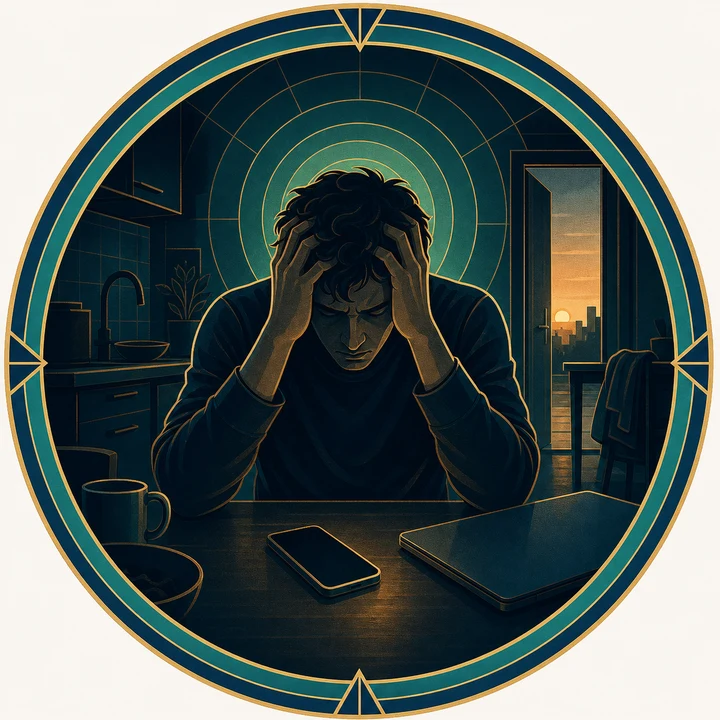
This has moved beyond a willpower problem.
What you're describing isn't a willpower problem. It's a behavioural loop that has been running long enough to become semi-automatic. The clinical literature calls this compulsive sexual behaviour disorder; it's listed in ICD-11 as an impulse-control disorder. The defining features aren't volume or frequency — they're loss of control, repeated failed attempts to stop, and continued use despite real consequences.
How it shows
- You've made many serious attempts to stop and they don't last.
- Use during work hours, while driving, or in inappropriate contexts.
- Sleep is significantly affected — sessions eating into the night, repeatedly.
- Real-life intimacy or partnered sex is harder than it was a year or two ago.
- You can predict the relapse before it happens but can't stop the chain.
The false bargain
“Tomorrow I'll start fresh.”
Moment to interrupt
Interrupt earlier in the chain than you think — usually hours before access.
Trap to watch
Treating this like a moral failure. It isn't. It's a behavioural loop that has been reinforced enough to function semi-automatically. The right response is structured help, not self-recrimination — and the self-recrimination itself is often part of what fuels the next relapse.
- 02
Identity conflict
Identity conflict
distress over what the content seems to mean about you.
The core insight
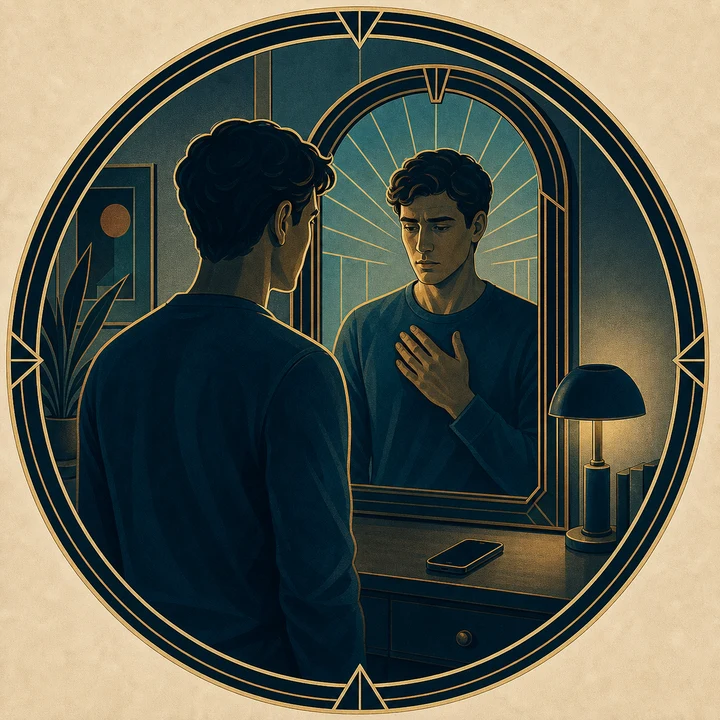
Your distress appears tied to what the content means to your identity — not to the content itself.
The most important thing this result is telling you is that your distress isn't about how much porn you use. It's about what the content seems to mean about you. There's a gap between the content you find yourself drawn to and the identity you hold publicly — or even privately. That gap is what hurts.
How it shows
- Certain content draws you in repeatedly even when you actively don't want it to.
- Some of what you watch surprises or confuses you when you think about it later.
- You'd be deeply uncomfortable if anyone — partner, family, friends — knew the categories.
- You sometimes wonder what the content "says about you" as a person.
- There's a split between your public identity and your private viewing that feels heavier than secrecy alone.
The false bargain
“If I keep it secret it doesn't count.”
Moment to interrupt
Interrupt the meaning-making, not the content.
Trap to watch
Mistaking what you watch for who you are. They overlap, but they aren't the same thing. The work is usually about the gap between authentic desire and public identity — not about the content itself.
- 03
Hidden use
Hidden use
hidden use that's putting pressure on a relationship.
The core insight
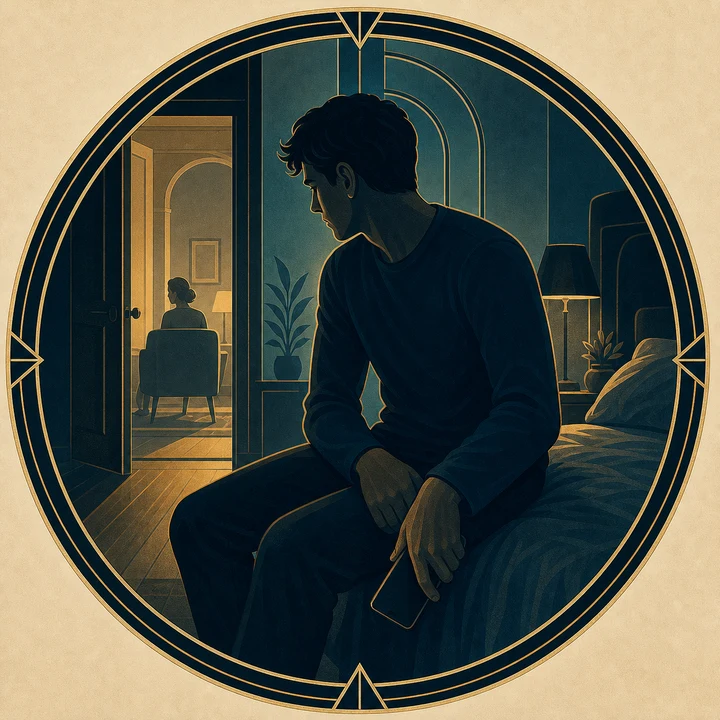
The hidden life is now part of the loop.
Your pattern's centre of gravity is secrecy, not the porn itself. You have a partner (or someone close who'd care), and your use is hidden from them. That hiding has become part of the problem — possibly larger than the use itself. Every act of concealment reinforces a split between your public self and your private behaviour, and that split has its own cost: anxiety, distance from your partner, intimacy avoidance, and the slow accumulation of guilt that needs somewhere to go (often, paradoxically, into more secret use).
How it shows
- You hide use from a partner, family member, or someone close.
- You've minimised, dodged, or actively lied when asked about it.
- The relationship has explicit or implicit agreements your use violates.
- You're emotionally or sexually less present in the relationship than you used to be.
- The secrecy itself feels heavier than the use — and adds anxiety on its own.
The false bargain
“What they don't know won't hurt them.”
Moment to interrupt
Interrupt at the secrecy and avoidance step, not the porn step.
Trap to watch
Optimising for hiding it better. The hidden life is the engine of the loop. The work is structured honesty, paced repair, and possibly a couples-aware therapist — not better operational security.
- 04
Shame loop
Shame loop
shame and values conflict around use.
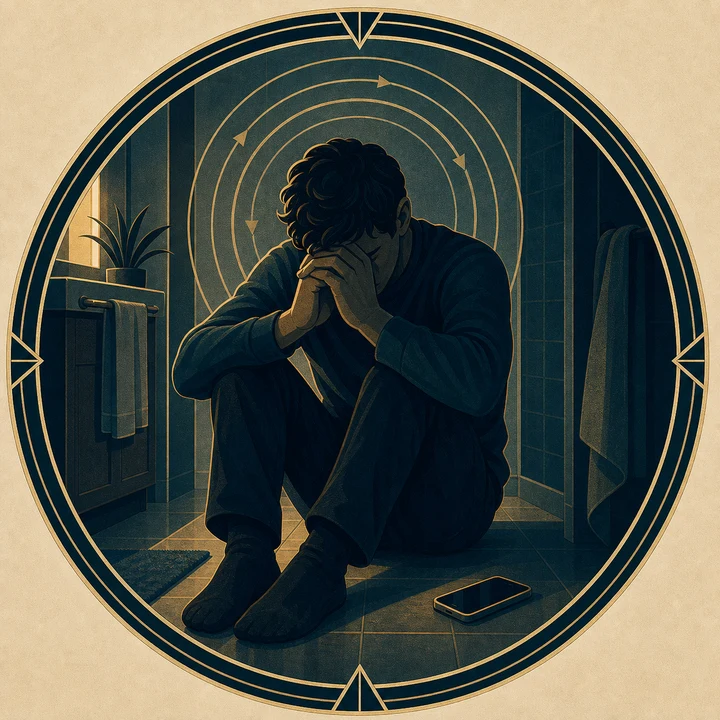
The core insight
Your distress is real, but it may not mean your use is clinically compulsive.
The most important thing this result is telling you: your distress is likely larger than your use. People in your profile often describe themselves as addicted, but the quiz suggests your control over the behaviour is broadly intact. What's not intact is the way you feel about it. There's a gap between what you do and what you believe you should be doing — and that gap, not the behaviour itself, is the main engine of your pain.
How it shows
- You describe yourself as an addict, but the use is moderate.
- Even small amounts of use can make you feel like you've failed.
- Each lapse triggers a spiral of self-judgment disproportionate to the act.
- You've found NoFap or recovery communities and oscillate between intense engagement and avoidance.
- Your distress would stay high even if porn never caused practical problems.
The false bargain
“A lapse means I am back to zero.”
Moment to interrupt
Interrupt the identity attack, not the behaviour.
Trap to watch
Mistaking your shame for proof of how bad the behaviour is. The shame is loud, but it's not always accurate evidence. Two people with identical use levels can have entirely different distress, depending on values and background — that's what the moral incongruence research shows.
- 05
Gooner pattern
Gooner pattern
long ritualised sessions that have become part of the identity.
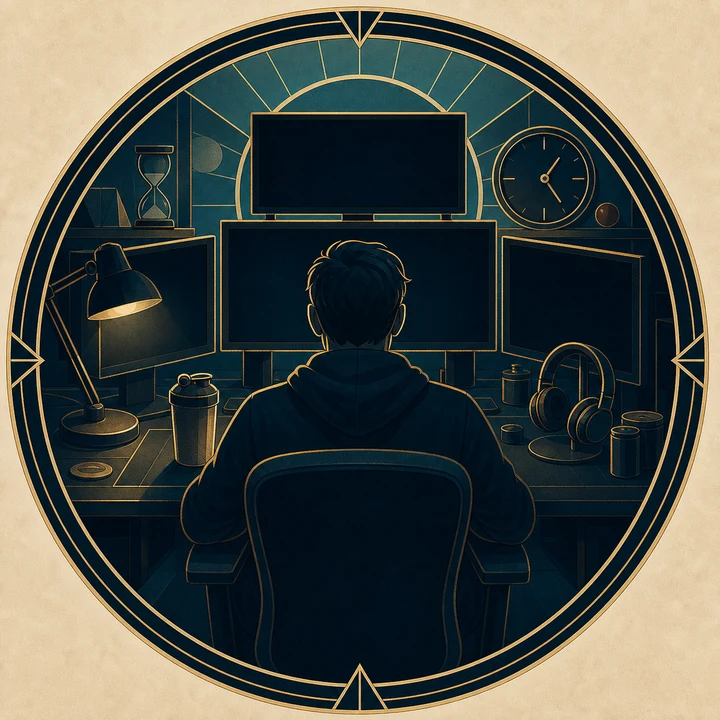
The core insight
The behaviour may have moved from habit into identity.
Your profile is unusual in one important way: low shame, high ritual intensity, and use that's often integrated into identity rather than at odds with it. The label is internet slang for someone whose porn use has become a protracted ritualised state — multi-hour sessions, long edging stretches, trance-like immersion, sometimes a sense of belonging to a subculture that's loud and matter-of-fact about it.
How it shows
- Sessions regularly run long — often hours rather than minutes.
- Edging is part of the ritual — staying at the edge for long stretches is part of what you're chasing.
- You actively look forward to the ritual and protect time for it.
- You're aware of subculture/community language around the behaviour and identify with at least some of it.
- Shame about the use itself is low to absent.
The false bargain
“If I embrace it, it can't hurt me.”
Moment to interrupt
Interrupt the ritual environment hours before the session.
Trap to watch
Confusing 'I'm not distressed' with 'no cost exists.' Lack of distress doesn't mean lack of cost. The cost in this profile usually shows up as intimacy, motivation, time, and arousal-system flexibility — not as guilt. Worth knowing what you're actually paying, even if you decide it's worth it.
- 06
Bingeing pattern
Bingeing pattern
long binge sessions and novelty chasing.
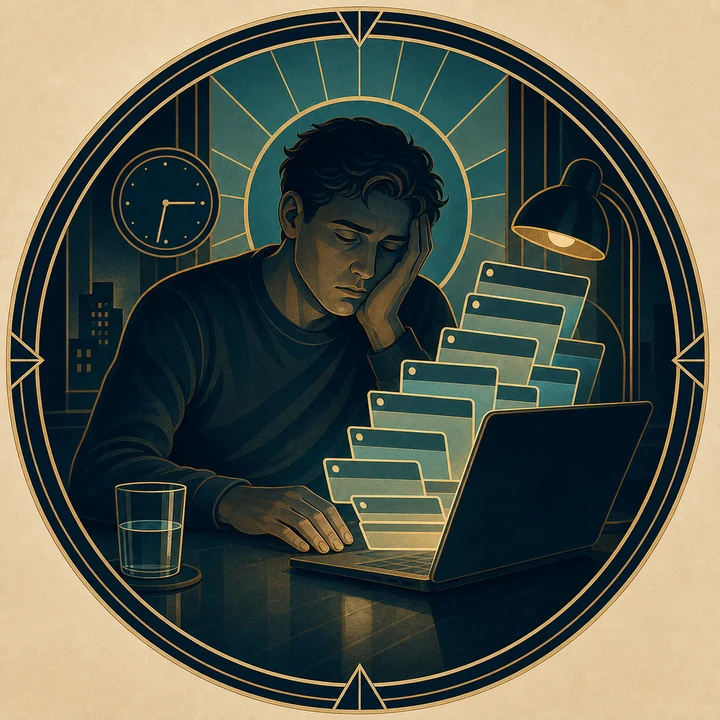
The core insight
The risk is not just what you watch. It is the duration, the novelty chasing, and the trance state.
Your signature is how the sessions run, not what kind of content draws you. Long sessions, tab-jumping, edging (deliberately delaying orgasm to extend the session), bingeing through content categories, chasing novelty — your arousal system has learned that more, faster, newer is what it now requires to register the same hit. This is a well-documented pattern; researchers call it qualitative or quantitative tolerance, and it's been mapped via network analysis as one of the most predictive markers of problematic use.
How it shows
- Sessions are longer than you intend, often by a lot.
- You spend more time searching for the 'right' thing than enjoying what you find.
- Content that used to work has lost its charge; you've moved toward more specific, intense, or novel material.
- Tab-jumping, multi-stream watching, or compilation videos are part of the pattern.
- Time disappears in a way that surprises you when you check the clock.
The false bargain
“I'll stop once I find the right thing.”
Moment to interrupt
Interrupt before privacy, time, and device combine.
Trap to watch
Reading the content drift as evidence of your real desires. The arousal system trains on what it gets repeated exposure to, with novelty as the fuel. What you've ended up watching after months of escalation says very little about who you are sexually — and a lot about how trained the system is.
- 07
Reward chasing
Reward chasing
a reward-driven habit with a built-up ritual.
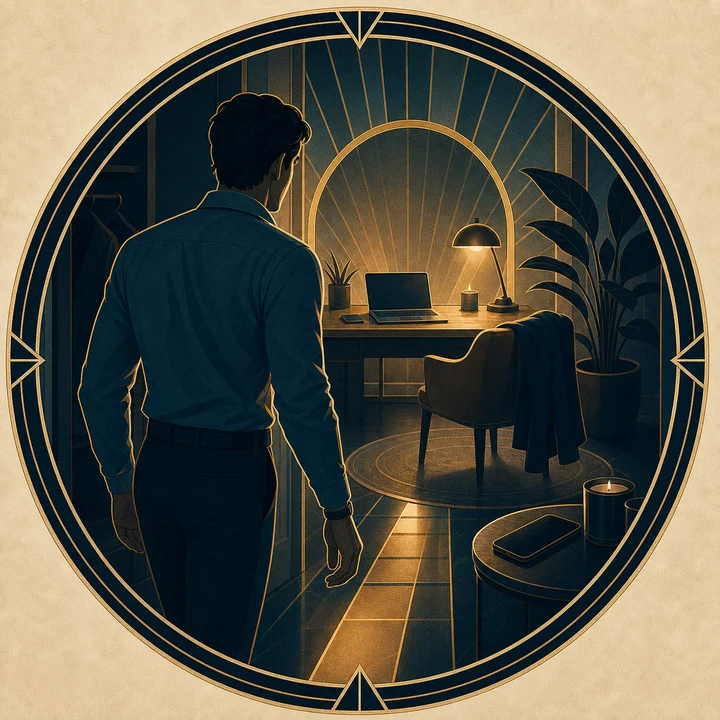
The core insight
This is a reward ritual, not just a coping habit.
Your profile is reward-driven rather than escape-driven. You're not mainly numbing pain with porn — you're pursuing a positively-felt reward state. There's anticipation. You make time for it. The ritual matters: time of day, device, room, the specific search pattern, sometimes even the music or lighting. It isn't a coping mechanism so much as a chosen pleasure that has hardened into a structured habit.
How it shows
- You look forward to it and plan around it.
- Specific ritual conditions matter — time, room, device, search style.
- Shame is relatively low; the urge feels more like wanting than needing.
- It's a reward you've earned in your head, not a coping tool.
- Reducing frequency without changing the ritual leaves it intact for next time.
The false bargain
“I've earned this.”
Moment to interrupt
Interrupt the ritual sequence, not the moment of access.
Trap to watch
Underestimating the role of the ritual. It's not that you 'want porn'; it's that you've built a structured reward sequence, and pulling the porn out of the middle of it leaves the rest of the sequence pulling you back in.
- 08
Mood escape
Mood escape
porn as a fast way out of a bad mood.
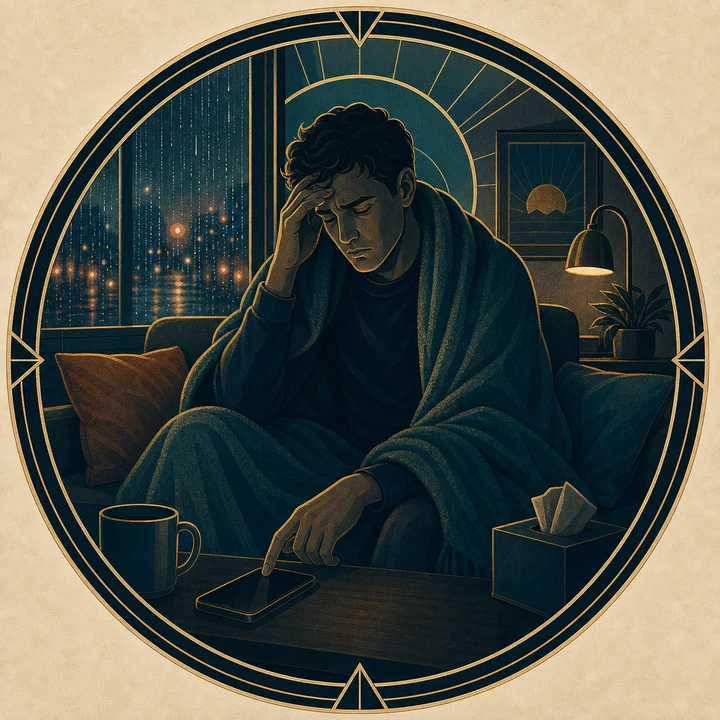
The core insight
Porn may not be your primary problem. It may be your fastest mood regulator.
When you reach for porn, you're rarely reaching for sex itself. You're reaching for a fast way out of a state you don't want to be in — boredom, anxiety, loneliness, post-conflict tension, the inability to sleep, the low-grade restlessness of a day that didn't go well. Porn happens to be the most reliable tool you have for changing that state. It works in under five minutes. It doesn't require another person. It changes your nervous system from "uncomfortable" to "occupied."
How it shows
- You reach for the phone within 60 seconds of feeling restless or anxious.
- Late-night use is your main pattern — when no one's around and the day's tension peaks.
- You can go days without it, then crash through several sessions in 48 hours after a stressful event.
- When life is calm, the urge fades. When life is hard, it spikes.
- You've sometimes wondered if the issue is 'really about the porn' — that intuition is worth trusting.
The false bargain
“I just need to calm down.”
Moment to interrupt
Interrupt at the emotional discomfort stage, not the moment of access.
Trap to watch
Mistaking the porn for the problem. The porn is the tool you reach for. The problem is having one go-to tool for state regulation. Until the alternatives exist, removing the tool just rotates the symptom.
- 09
Dopamine snacking
Dopamine snacking
repeated quick hits of stimulation through the day.
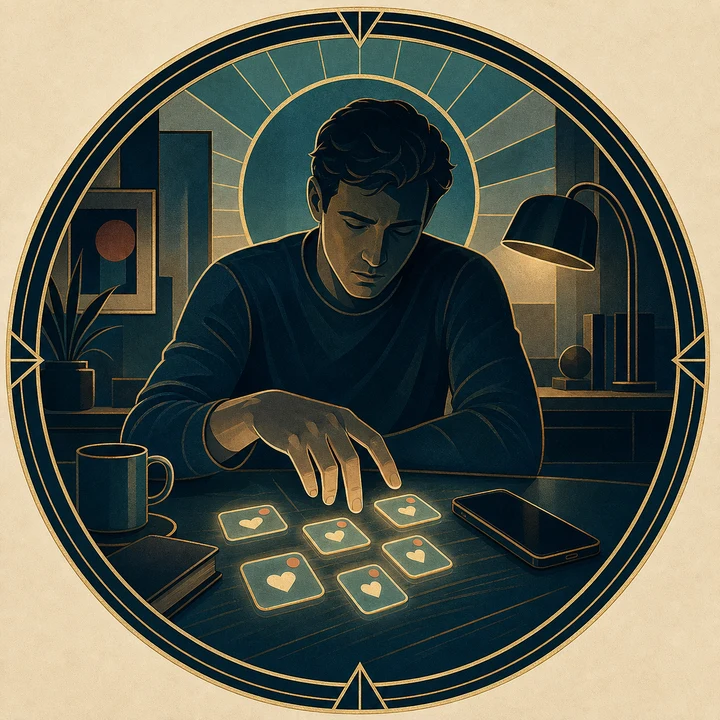
The core insight
Each episode feels small, so the pattern hides in plain sight.
Your pattern hides in plain sight. You're not bingeing for hours. You're checking — quick hits of sexual or sexual-adjacent stimulation distributed through the day. A peek between meetings. A drift through Instagram models. A short search on a slow afternoon. Each episode feels small and forgettable. The pattern they form is the actual issue.
How it shows
- You check sexual or sexual-adjacent content multiple times a day in brief bursts.
- Sessions are usually short — minutes, not hours.
- The trigger is usually a small dead moment (a queue, a meeting break, sitting down for lunch alone).
- You'd probably describe yourself as 'not really a heavy user' — and you're right by traditional measures.
- Your general attention span and ability to sit with boredom have eroded over the past year or two.
The false bargain
“It's just a quick look.”
Moment to interrupt
Interrupt at the boredom signal, not the search.
Trap to watch
Underestimating it because each session is small. The pattern is the issue, not any single episode. By the time it shows up in your attention or sexual responsiveness, it's been training for months.
- 10
Algorithmic drift
Algorithmic drift
algorithmic drift via scrolling and soft content.
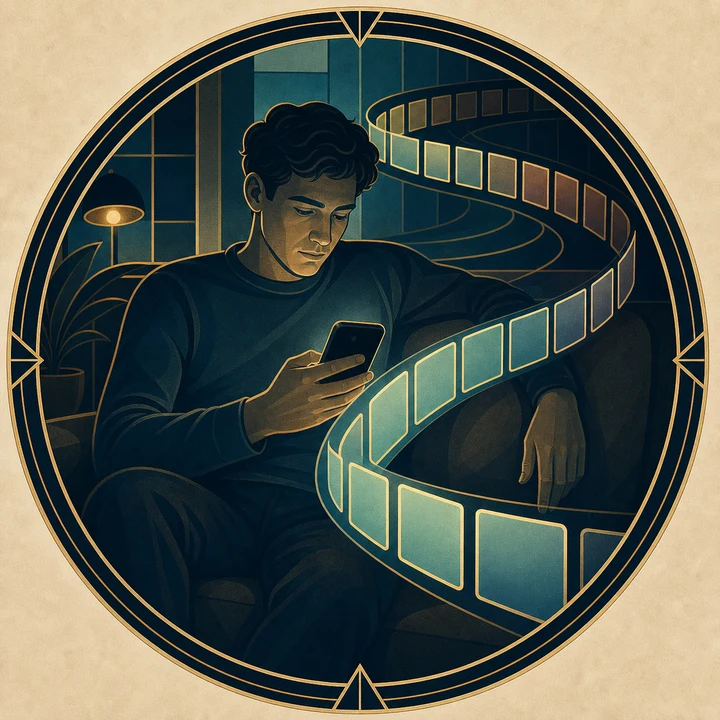
The core insight
The problem may not start at the porn site. It starts ten minutes earlier.
Your pattern is one of the most common things in 2026 and one of the least examined. You don't usually start sessions by deciding to watch porn. You start them by scrolling — Instagram, TikTok, Reddit, a celebrity search, a dating app, a YouTube algorithm feeding you progressively more suggestive content. Twenty minutes in, you're already aroused, already in a particular cognitive state, already with the device in hand. The 'decision' to watch porn often isn't a decision at all by that point — it's the natural endpoint of a slide that started somewhere benign.
How it shows
- Sessions usually start with scrolling, not a deliberate decision.
- You can identify specific accounts or platforms that reliably begin the slide.
- Once it starts, it tends to run on autopilot — but you can stop it if you catch it early.
- Use level overall is moderate; shame and dyscontrol are low.
- Late night + phone in bed is the most common context.
The false bargain
“It's not porn yet.”
Moment to interrupt
Interrupt at the soft-content stage, not the porn stage.
Trap to watch
Overdiagnosing yourself. You probably don't have a clinical problem. You have a digital environment optimised to extract attention through arousal, and you've adapted to it. Adjusting the environment usually solves more than adjusting yourself.
- 11
Recreational use
Recreational use
recreational use with no compulsive pattern.

The core insight
Your pattern does not look like a compulsive one.
Your answers don't look like a compulsive pattern. Use, if it's present at all, is moderate, doesn't drive distress, doesn't impair sleep or intimacy or work, and doesn't conflict meaningfully with your values. This profile isn't a clinical concern. It's roughly the population baseline.
How it shows
- Use is moderate, infrequent, or absent.
- Doesn't conflict significantly with your values.
- Doesn't compete with sleep, work, intimacy, or focus.
- You can stop and start without it feeling effortful.
- Shame and secrecy are low.
Moment to interrupt
No interrupt needed right now. Monitor the early warning signs above.
Trap to watch
Treating this result as license to ignore the trajectory. Most problematic patterns started in this profile. The use itself isn't the early-warning; the way it starts to relate to sleep, intimacy, and mood-regulation is.
Find yours
Which one is yours?
The quiz takes about six minutes and returns a primary and secondary profile, plus a personalised loop and action map.
Take the quiz →