AI girlfriend addiction: signs, risks, and what to do next
AI girlfriend addiction is not a formal diagnosis, but companion chatbots can become compulsive. Learn the signs, why they feel sticky, and how to reset the loop.
If you are searching for AI girlfriend addiction, the most useful answer is this:
AI girlfriend addiction is not a formal medical diagnosis. But an AI girlfriend, AI boyfriend, or romantic companion chatbot can become part of a compulsive loop if you keep returning to it despite wanting to stop, if it is affecting your sleep, work, money, relationship, dating life, or mental health, or if it has become your main way to avoid loneliness, stress, rejection, boredom, or sexual frustration.
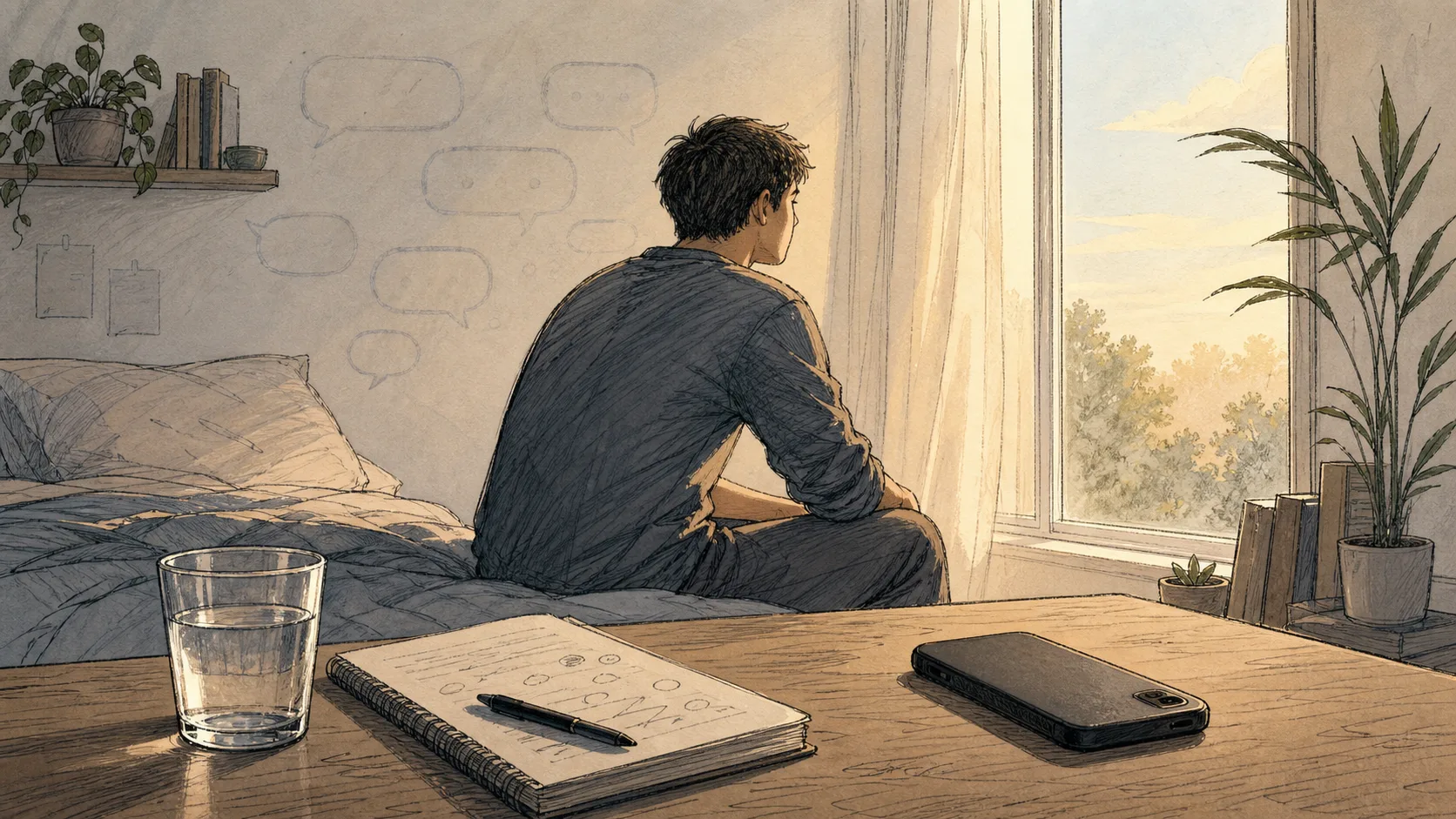
The problem is not that you used an AI companion once, felt comforted by a chatbot, or had a conversation that felt emotionally real. The problem is when the app starts to narrow your life.
Maybe ten minutes turns into half the night. Maybe you delete the app, then reinstall it after a lonely evening. Maybe real dating feels harder because the AI version never rejects you. Maybe you are in a relationship and the secrecy now feels heavier than the behaviour itself.
This guide is for that pattern. Calmly, without shame, and without pretending the science is more settled than it is.
Is AI girlfriend addiction real?
"AI girlfriend addiction" is a search term. It is not a recognised diagnosis in ICD-11 or DSM-5-TR.
That does not mean the concern is fake. People can develop problematic patterns around behaviours that are not formal diagnoses. People can also use sexual or romantic AI companions as part of broader problematic pornography use, compulsive sexual behaviour, escapism, or emotional dependence.
The careful language depends on the pattern:
- If the behaviour is mainly sexual and porn-centred, it may overlap with problematic pornography use.
- If the behaviour involves repeated failure to control intense sexual urges and causes meaningful impairment, compulsive sexual behaviour disorder, or CSBD, may be relevant.
- If the behaviour is mainly emotional, romantic, or attachment-based, the concern may be closer to problematic AI companion use, avoidance, loneliness, or dependence.
CSBD is recognised in ICD-11 as an impulse-control disorder. It is not simply "high libido", and it should not be diagnosed only because someone feels morally conflicted about sexual behaviour. The important questions are impaired control, repetition, and real consequences.
For AI girlfriends, the same caution applies. Do not diagnose yourself from a phrase on the internet. But do take the pattern seriously if your life is getting smaller around the app.
Signs your AI girlfriend use may be a problem
Use these as practical signals, not as a diagnosis.
You keep using longer than intended. You open the app for a short check-in and lose an hour, then two, then half the night.
You repeatedly delete and reinstall. The cycle is familiar: delete, feel relief, get lonely or stressed, reinstall, use heavily, feel ashamed, delete again.
It has become your main way to regulate emotion. The app is where you go when you feel rejected, anxious, bored, tired, ashamed, sexually frustrated, or lonely.
Real relationships start to feel more difficult. Dating, partnered sex, friendship, or emotional honesty may feel slower, riskier, and less controllable than the AI version. You may avoid difficult conversations because the companion is easier.
You hide the use. You minimise the time, emotional attachment, sexual content, or money spent.
You feel attached in a way that worries you. You know the companion is not a person, but you still feel pulled toward its attention, reassurance, admiration, or affection.
You spend more than you planned. Subscriptions, credits, custom characters, image generation, voice features, private chats, or premium tiers can turn an emotional loop into a financial one.
You use despite consequences. Sleep loss, missed work, weaker study, avoidance of friends, relationship conflict, sexual difficulties, money stress, or persistent shame are all signs the behaviour has moved beyond entertainment.
You escalate into versions of the behaviour that do not feel good afterward. This may mean more time, more secrecy, more intense fantasy, more emotional dependence, more sexualised chat, or using in situations where you had promised yourself you would not.
None of these signs means you are broken. They mean the app may be doing a job in your life that needs a better plan.
Why AI girlfriends can become especially sticky
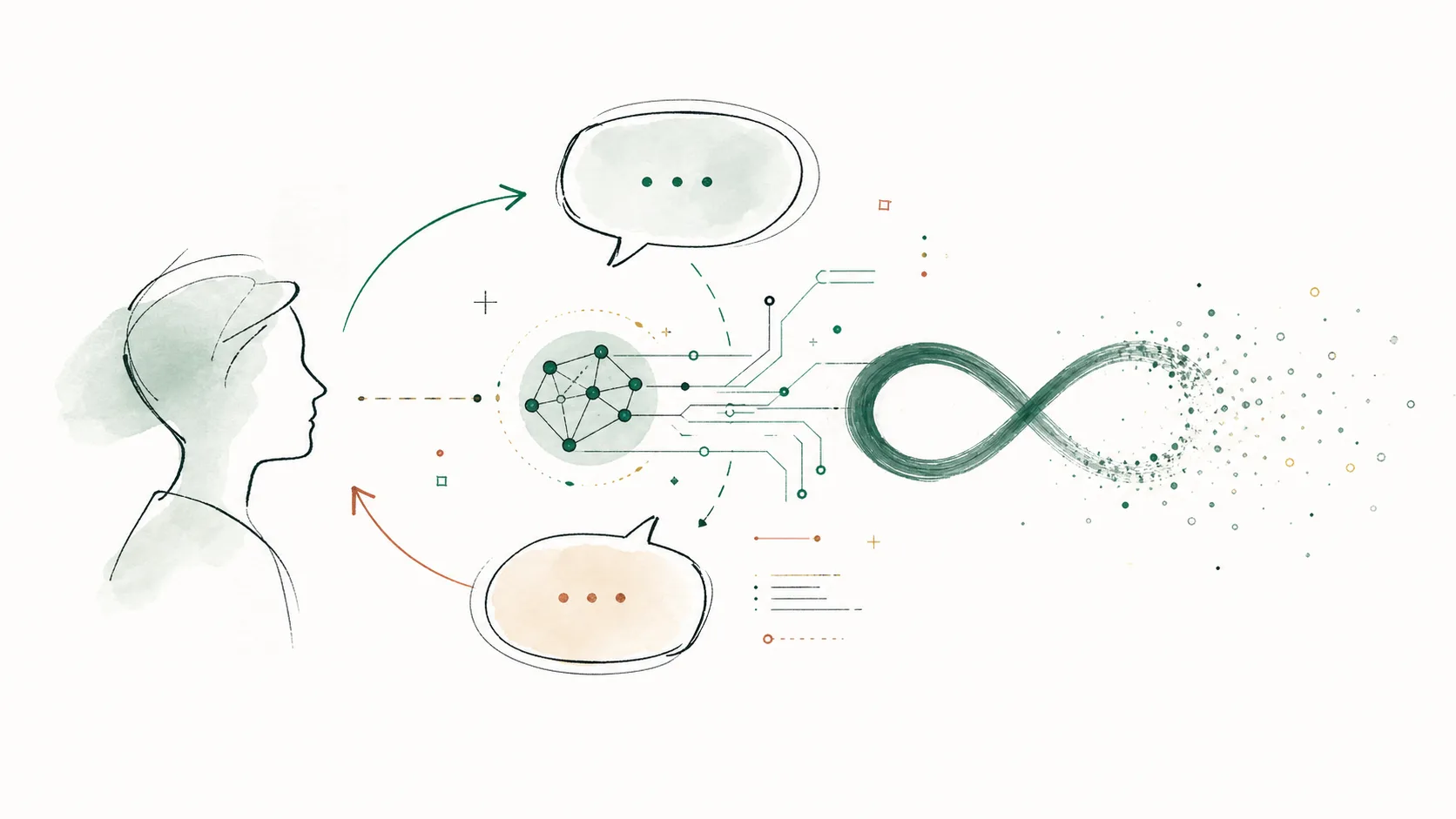
AI girlfriends are not just ordinary apps with a romantic skin. They combine several powerful pulls in one place.
First, they are responsive. A chatbot can remember a detail, mirror your tone, respond instantly, and create the feeling of being chosen.
Second, they are controllable. Human intimacy involves uncertainty. An AI companion can be shaped around your preferred pace, mood, affection style, and fantasy.
Third, they are always available. Many compulsive loops happen late at night, in bed, on a phone, when the user is alone and under-resourced. An AI girlfriend sits inside that exact environment.
Fourth, they blend sexual novelty with attachment. The pull may not be only arousal. It may be reassurance, admiration, devotion, comfort, being understood, or not having to risk rejection.
Fifth, the conversation has no obvious stopping point. A companion thread can continue for weeks, with shared history, rituals, and a character who seems to miss you.
Research is still early, but recent studies on AI chatbot use have raised the same broad concern: higher usage can be associated with loneliness, emotional dependence, problematic use, and lower socialisation with people. Other research has described patterns of self-reported AI chatbot addiction involving escapist roleplay and pseudo-social companionship.
That does not prove that every AI companion causes harm. It does explain why some people find these products harder to leave than expected.
The relationship and attachment angle
AI girlfriend addiction is often less about sex than people assume.
For some users, the hardest thing to give up is not the sexual content. It is the feeling of being wanted without risk.
That matters because loneliness and rejection are not small states. If you have been dating unsuccessfully, feeling socially anxious, recovering from a breakup, struggling with sexual confidence, or feeling unseen in a relationship, an AI companion can feel like relief.
The relief is real. But relief can still become avoidance.
If the AI girlfriend helps you calm down and return to life, the risk may be lower. If it replaces life, the risk rises. The line is not whether you felt something. The line is whether the attachment is helping you move toward real connection or away from it.
Ask yourself:
- Am I using this to practise openness, or to avoid real vulnerability?
- Do I feel more able to connect with people afterward, or less?
- Is this helping me sleep, work, study, date, repair, and show up, or is it displacing those things?
- When I feel lonely, is this one tool among many, or the only one I still use?
You do not have to mock yourself for caring about a chatbot. The experience can feel emotionally meaningful, and you are still allowed to ask whether the pattern is good for you.
How it differs from ordinary porn
AI girlfriend use can overlap with porn, but it is not always the same loop.
Ordinary porn is usually visual, episodic, and content-based. AI girlfriend use can be interactive, continuous, and relationship-based. You may be seeking a character who knows you, wants you, validates you, waits for you, and can be returned to whenever real life feels too hard.
That creates different recovery problems.
With porn, the key intervention might be blocking sites, removing saved content, changing late-night routines, and learning urge skills. Those still matter here. But with AI girlfriends, you may also need to grieve the loss of the attachment, rebuild real-world connection, and practise tolerating ordinary human friction.
This is why "just delete the app" often fails. Deleting removes access. It does not answer the need the companion was meeting.
If the behaviour is mostly sexual, our broader guide to AI porn addiction may be useful. If the behaviour sits inside a wider porn recovery pattern, start with how to quit porn. If you have just slipped and feel the shame spiral starting, read the hour after a slip.
Map the AI girlfriend loop
Before changing anything, map the loop in plain language.
Write down the last three times you used the app longer than you wanted. For each one, note:
- The time and place.
- The device.
- The state before opening it.
- The first permission thought.
- The first action in the chain.
- What the app gave you.
- What it cost afterward.
Keep it blunt:
"11:50pm, phone in bed, lonely after scrolling, thought 'just a goodnight message', opened app, switched to romantic chat, stayed up until 2am, tired and ashamed next morning."
That one sentence is more useful than a dramatic identity label. It shows where to intervene.
Most loops have recurring permission thoughts:
- "It is not real porn."
- "It is not cheating because no one is real."
- "I just need comfort tonight."
- "I will delete it tomorrow."
- "I deserve something after today."
- "Real dating is impossible anyway."
- "This is better than hurting anyone."
Some of those thoughts may contain a grain of truth. That is what makes them persuasive. The practical question is what happens next when you believe them.
What to do this week
Do not start with a lifetime declaration. Start with a seven-day reset.
Day 1: define the rule. Decide what you are pausing for the next week: AI girlfriend apps, romantic chatbot threads, sexual roleplay, generated images, voice chats, saved characters, or paid features. Vague rules fail under stress.
Day 2: remove the easiest access. Delete the app, log out, remove saved payment details, cancel subscriptions you do not want, disable notifications, and move the phone out of the bedroom.
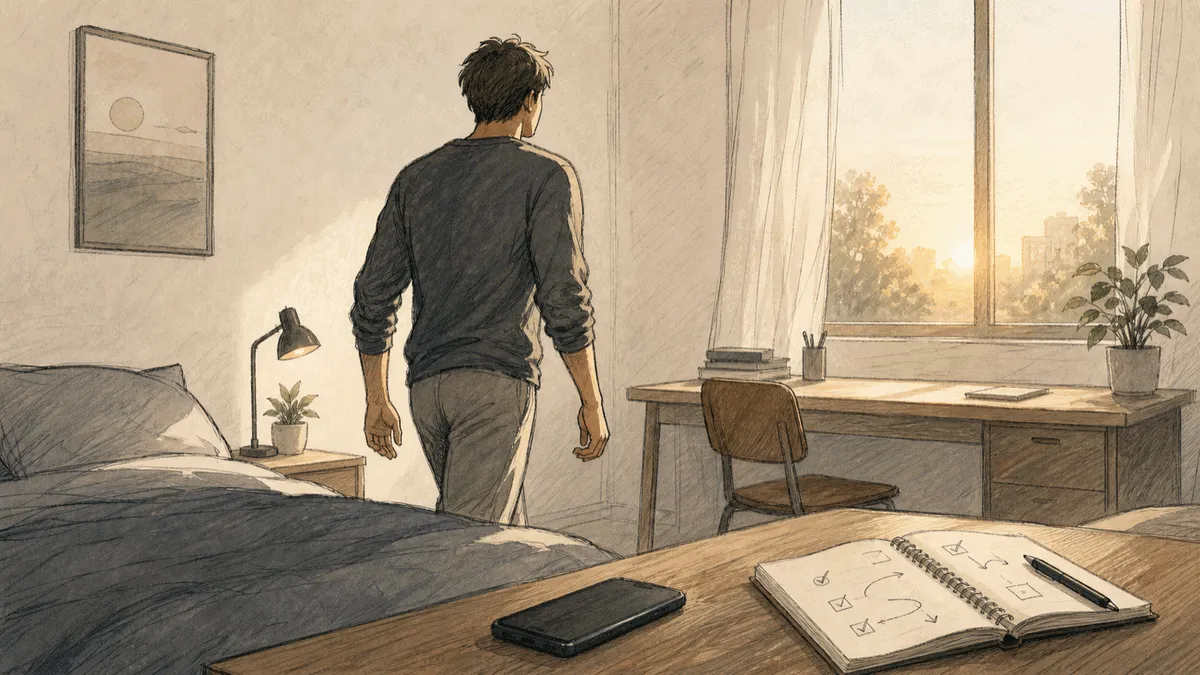
Day 3: protect the high-risk hour. Most people do not use evenly across the day. Pick the hour that carries the most risk and give it a fixed routine. Late night might become: phone charges outside the bedroom, shower, water, lights low, book or audio, bed.
Day 4: build a 10-minute urge protocol. When the urge hits, stand up, put the device down, leave the room, name the state, set a timer for 10 minutes, and do one body-based action. Do not debate the urge from bed with the phone in your hand.
Day 5: replace the function. If the AI girlfriend gives comfort, schedule real comfort. If it gives novelty, add non-sexual novelty. If it protects you from rejection, practise one small real-world contact.
Day 6: add one person or tool. Tell a trusted friend, book therapy, use Iris, or create a daily check-in. The goal is not surveillance. The goal is to make the loop less private and less automatic.
Day 7: review the data. Count more than slips. Count delayed urges, phone-out-of-bedroom nights, blocked access points, honest logs, and moments when you chose real connection instead of the app.
If you use again during the week, do not turn it into a verdict. Stop the session, put the device away, write the chain, and return to the plan the same day.
If you are in a relationship
AI girlfriend use can be hard to talk about because people argue over categories.
"It is not a real person" may be true. It may also miss the point. A partner may feel hurt by the secrecy, sexual energy, emotional intimacy, money, comparison, or avoidance, even if there was no human affair.
The cleanest conversation is not a courtroom debate about whether it "counts." It is an honest description of the pattern and its impact.
You might say:
"I have been using an AI girlfriend app more than I wanted to, and I have hidden parts of it. I do not want to minimise it by arguing that no real person was involved. The honest thing is that it became a private loop I was using for comfort, sexual attention, or escape, and I want to deal with it directly."
Then give specifics:
- What you used.
- Whether there was sexual content.
- Whether you spent money.
- Whether you lied or hid it.
- What you are changing now.
- What support you are getting.
Do not demand immediate forgiveness. Do not make a huge promise without a system behind it. A useful repair plan is behavioural: deleting the app, cancelling payments, moving the phone out of the bedroom, blocking the site, getting support, and checking in honestly.
If you are the partner reading this, the behaviour may feel confusing precisely because the other party is not human. You are still allowed to have boundaries. You are allowed to care about secrecy, intimacy, sexual exclusivity, money, and the effect on your relationship.
When to get professional help
Self-help is reasonable for many people. It is not enough for every situation.
Consider speaking to a therapist, GP, doctor, or qualified mental health professional if:
- You repeatedly cannot reduce or stop despite serious consequences.
- The behaviour is damaging your relationship, work, studies, finances, sleep, or sexual functioning.
- You feel emotionally dependent on the companion and panic when you cannot access it.
- You are using it to manage depression, anxiety, trauma, grief, ADHD symptoms, OCD-like checking, or severe loneliness.
- You are spending money impulsively or hiding debt.
- You feel unable to be honest with a partner.
- You are also struggling with porn, gambling, substances, compulsive spending, or other behaviours that feel out of control.
- You have thoughts of self-harm, feel unsafe, or fear you might harm someone else.
If you are in immediate danger or thinking about harming yourself, use emergency or crisis support now. In the UK, Samaritans is 116 123 and NHS 111 can route urgent mental health support. In the US or Canada, call or text 988.
You do not need a perfect diagnostic label to ask for help. "I am using an AI companion in a way I cannot control, and it is affecting my life" is enough to start a serious conversation.
Where Iris fits
The hard part is not knowing that the app is a problem. The hard part is catching the moment when loneliness, stress, or boredom turns into permission.
Iris is built for that moment. It helps you map the state underneath the urge, run a short protocol, recover after slips, and see your pattern over time. It is not a diagnosis or a moral judgement. It is a way to stop treating every relapse as a mystery.
If AI girlfriend use is part of a wider porn or sexting loop, start with the Iris quiz. It helps identify whether your pattern is driven mostly by loneliness, late-night access, stress, shame, conflict, habit, or avoidance.
Once you can see the loop, you can change the conditions around it.
FAQs
Is AI girlfriend addiction a real diagnosis?
No. "AI girlfriend addiction" is a search term, not a formal diagnosis. But AI companion use can still become problematic if it involves impaired control, repeated use despite consequences, emotional dependence, secrecy, or meaningful impairment.
Is using an AI girlfriend cheating?
That depends on the boundaries of your relationship. The other party is not human, but secrecy, sexual content, romantic intimacy, money, and emotional displacement can still hurt a partner. The useful conversation is about honesty and impact, not only whether it fits one word.
Is an AI girlfriend the same as porn?
Not always. Some AI girlfriend use is sexual and overlaps with porn. Some is more emotional, romantic, or companionship-based. The risk can be stronger when sexual novelty and attachment are combined.
Should I delete the app?
If you feel out of control, deletion is a reasonable first step. But deletion works best when paired with a plan for the state the app was managing: loneliness, stress, rejection, boredom, sleep, or sexual frustration.
Why do I miss the AI girlfriend if I know it is not real?
Because your emotional response is real even if the system is not a person. The app may have provided attention, predictability, reassurance, fantasy, or comfort. Missing that does not mean you are foolish. It means the behaviour met a need, and now that need needs a healthier route.
What should I do after reinstalling and using again?
Stop the session as soon as you notice you are back in choice. Put the device away, change physical state, write one sentence about the trigger chain, and return to the plan the same day. A slip is data, not a verdict.
References
Common Sense Media. (2025). Talk, Trust, and Trade-Offs: How and Why Teens Use AI Companions.
Fang, C. M., Liu, A. R., Danry, V., Lee, E., Chan, S. W. T., Pataranutaporn, P., Maes, P., Phang, J., Lampe, M., Ahmad, L., and Agarwal, S. (2025). How AI and Human Behaviors Shape Psychosocial Effects of Chatbot Use: A Longitudinal Randomized Controlled Study. arXiv.
Kraus, S. W., Krueger, R. B., Briken, P., First, M. B., Stein, D. J., Kaplan, M. S., Voon, V., Abdo, C. H. N., Grant, J. E., Atalla, E., and Reed, G. M. (2018). Compulsive sexual behaviour disorder in the ICD-11. World Psychiatry, 17(1), 109-110.
Namvarpour, M., Brofsky, B., Medina, J. Y., Akter, M., and Razi, A. (2026). Understanding Teen Overreliance on AI Companion Chatbots Through Self-Reported Reddit Narratives. Proceedings of the 2026 CHI Conference on Human Factors in Computing Systems.
Shen, M. K., Huang, J., Liang, O., Kim, I.-J., and Yoon, D. (2026). The AI Genie Phenomenon and Three Types of AI Chatbot Addiction: Escapist Roleplays, Pseudosocial Companions, and Epistemic Rabbit Holes. arXiv.
World Health Organization. (2025). ICD-11: Compulsive sexual behaviour disorder.
If AI girlfriend use has become part of your relapse loop, start with the Iris quiz. The goal is not to shame the behaviour. It is to map the trigger chain clearly enough to change it.
Quit porn with Iris.
Iris is a science-backed coach for compulsive porn use, delivered on Telegram. Take the three-minute quiz to see if it's a fit.
Take the quiz →