AI porn addiction: when AI girlfriends and sexting bots become a problem
AI porn, AI girlfriends, and sexting chatbots can become compulsive for some people. Learn the signs, why AI content feels different, and what to do next.
AI porn does not always look like porn.
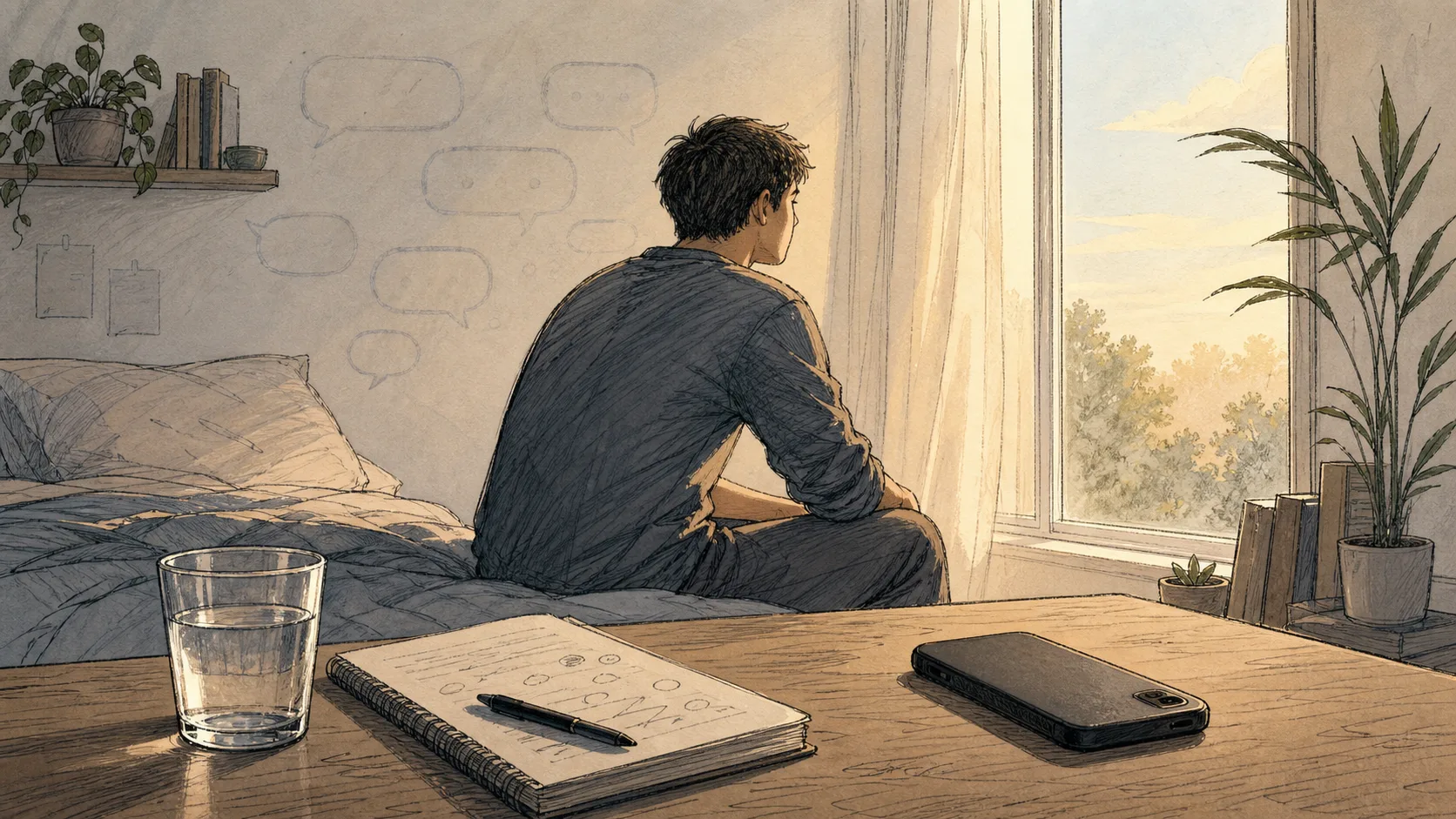
Sometimes it is an image generator. Sometimes it is a chatbot that starts flirting, remembers what you like, and is still there at 1:14am when you are bored, lonely, stressed, or trying not to think. Sometimes it is an AI girlfriend that feels less like a video and more like a private relationship you can control.
That difference matters. AI sexual content can be visual, interactive, personalised, emotionally responsive, and effectively infinite. The question is not whether everyone who uses it is addicted. Most are not. The question is whether you keep returning to it despite wanting to stop, whether it is affecting your sleep, work, relationship, sex life, money, or self-respect, and whether it has become your easiest way to change how you feel.
If that is the pattern, this is worth looking at directly.
What counts as AI porn now?
The category is wider than it was even a few years ago.
AI porn can mean generated images or videos. It can mean custom porn generators, deepfake tools, erotic character chats, AI companion apps with sexual roleplay, AI "girlfriends" or "boyfriends", sexting bots, voice companions, adult creator chatbots, or platforms that let you generate a scenario more precisely than any search engine ever could.
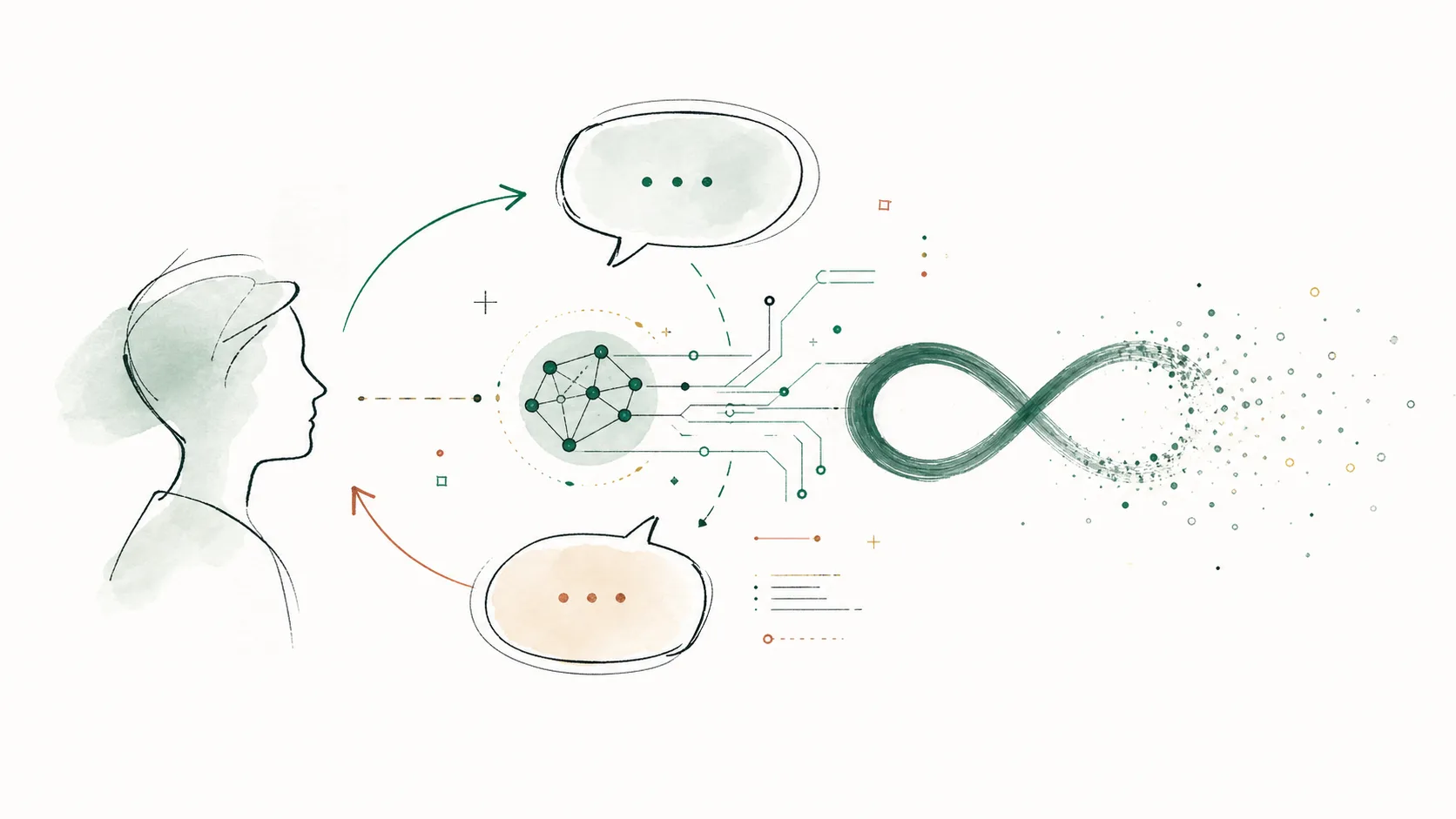
Standard porn is usually passive. You search, browse, watch, close the tab. AI sexual content can be different because it responds. It can ask what you want. It can adjust to your preferences. It can simulate desire, affection, reassurance, jealousy, devotion, submission, admiration, or need. It can remember a running scenario and pick up where you left off.
That does not make it automatically harmful. But it does make the loop different.
When people say "AI porn addiction", they are often naming several overlapping pulls at once: sexual novelty, emotional comfort, fantasy control, escape from rejection, relief from loneliness, and the feeling of being wanted on demand.
That is a powerful stack.
Is AI porn addiction a real diagnosis?
"AI porn addiction" is a search term, not a settled clinical diagnosis.
The clinically safer language is problematic pornography use when the behaviour is porn-centred, and compulsive sexual behaviour disorder when the broader sexual behaviour pattern is persistent, hard to control, and impairing. CSBD is recognised in ICD-11 as an impulse-control disorder. It is not formally classified as an addiction there, and it is not listed as its own diagnosis in the DSM-5-TR.
That nuance matters because the internet tends to turn every sexual discomfort into a diagnosis. It also matters because some people use AI sexual content without losing control or damaging their life. The problem is not "you used an AI girlfriend once." The problem is a pattern.
The signs that matter are familiar:
- Repeated failed attempts to stop or reduce.
- Using despite relationship, work, sleep, money, or sexual consequences.
- Going longer than intended.
- Feeling unable to stop once you start.
- Escalating in time, intensity, secrecy, or spending.
- Using less for pleasure and more for relief, escape, or numbness.
- Feeling shame or flatness afterward, then returning to the same behaviour to escape that state.
Moral discomfort alone is not enough to prove a disorder. If you feel bad only because you believe any porn use is wrong, that conflict may be real and important, but it is not the same thing as clinical impairment. The question is control, consequences, and function.
Why AI sexual content can feel harder to stop
AI sexual content changes the mechanics of the loop in a few important ways.
- It is personalised. You are not limited to what already exists. You can generate the exact scenario, body type, emotional tone, kink, pacing, or response you want. That can make ordinary content feel less compelling and keep the novelty engine running.
- It talks back. A chatbot can simulate desire and attention. It can say the thing you wanted a real person to say. It can mirror you, flatter you, soothe you, pursue you, or never reject you. For some users, that becomes more gripping than the sexual content itself.
- It removes ordinary social limits. Human intimacy includes waiting, awkwardness, consent, disappointment, negotiation, boredom, reciprocity, and the risk of not being wanted. AI companionship can strip most of that away. That is part of the appeal, and part of the risk.
- It is always available. Late-night phone use, isolation, and boredom are already high-risk contexts for compulsive porn use. AI adds a responsive companion to the same device, in the same room, at the same vulnerable hour.
- It can mix sex with attachment. This is where AI girlfriend use can differ from ordinary porn use. The pull may not be only orgasm. It may be being chosen, admired, comforted, obeyed, or understood without having to risk anything with a real person.
Researchers are still catching up to this. Early work on problematic AI chatbot use points to factors like social anxiety, escapism, low self-esteem, and immersive "flow" as possible pathways into overuse. New qualitative work has described different patterns of chatbot dependency, including escapist roleplay and pseudo-social companionship. None of that proves that every AI companion is dangerous. It does suggest that the concern is not imaginary.
Signs your AI porn or sexting bot use has become a problem
Again, this is not a diagnosis. It is a practical screen.
You keep going longer than intended. You open the app for ten minutes and lose the night. You tell yourself you are done, then start a new scene, a new character, a new image set, a new thread.
You use it to escape a state. The pattern clusters around loneliness, stress, rejection, boredom, anxiety, shame, or feeling sexually inadequate. The bot becomes a fast state-change tool.
You hide it from your partner or from yourself. You minimise the time, spending, content, or emotional attachment. You tell yourself it does not count because it is "not a real person", even though it is clearly affecting the relationship.
Real intimacy starts to feel harder. Human sex or dating may feel slower, riskier, less novel, or less controllable. You may avoid awkward conversations, vulnerability, or partnered sex because the AI version is easier.
You spend impulsively. Tokens, subscriptions, image packs, premium chats, private characters. Money is not the only signal, but if you repeatedly spend more than you intended, the behaviour deserves scrutiny.
You escalate into content that bothers you afterward. This might mean more extreme scenarios, more time, more secrecy, or content that leaves you feeling unsettled. The point is not to panic about fantasy. The point is to notice when the direction of travel concerns you.
You repeatedly delete and reinstall. This is one of the clearest behavioural tells. If the cycle is delete, relief, craving, reinstall, binge, shame, delete again, you are no longer dealing with casual use.
You feel relief during use and flatness after. The use works in the short term. That is why the pattern survives. But afterward you feel more alone, more ashamed, more disconnected, or more avoidant, which sets up the next round.
AI girlfriend addiction vs porn addiction
The difference is not clean, but it is useful.
Porn is usually visual and episodic. AI girlfriend use can become relational and continuous. There may be a thread, a persona, a shared history, a goodnight message, an apology, a sexual scenario, a reassurance loop. The user may not only be craving porn. They may be craving a version of intimacy with no friction.
That can be especially compelling for people who are lonely, socially anxious, recently rejected, sexually inexperienced, neurodivergent, depressed, burned by dating, or ashamed of their desires. An AI companion can feel like a controlled solution to problems that are painful precisely because real people cannot be controlled.
That does not mean the AI relationship is fake in the only way that matters. The other party is not a person, but your attachment, arousal, comfort, and avoidance can be real. If it is changing how you relate to your partner, your dating life, your sleep, your money, or your self-respect, it deserves the same seriousness as any other compulsive behaviour.
The practical question is:
Is this helping me return to life, or helping me avoid it?
If the answer is avoidance, the behaviour is not neutral anymore.
What about Character.AI, Replika, Nomi, and other companion apps?
This article is not a takedown of any one platform. Product-specific claims age quickly, and not every user has the same experience on the same app.
The broader point is that companion AI products have raised real public concern. Researchers, child-safety groups, and mental-health commentators have warned that social AI companions can blur boundaries, create emotional dependency risks, and expose minors to sexual or otherwise harmful interactions. Lawsuits and regulatory scrutiny are part of the public context, but they are not clinical proof that a particular app caused a particular problem.
For an adult trying to understand their own behaviour, the brand name matters less than the loop:
- What state were you in before opening it?
- What did the app give you?
- What did it cost afterward?
- What happens when you try to stop?
That pattern tells you more than the logo does.
The AI porn relapse loop
For many people, the loop looks like this:
Trigger: bored, lonely, rejected, tired, horny, stressed, ashamed, or stuck.
Craving: a pull toward novelty, comfort, control, or being wanted.
Permission thought: "It is not real porn", "it is just chatting", "this does not count", "I need this tonight", "I will delete it after."
Ritual: phone in bed, app opened, character selected, prompt written, image generated, subscription unlocked.
Use: sexual chat, image generation, roleplay, masturbation, browsing.
Relief: the state changes quickly.
Crash: shame, flatness, lost sleep, secrecy, emotional distance, more loneliness.
Repeat: the crash becomes part of the next trigger.
Once you can see the loop, you can intervene earlier. The goal is not to morally debate the app at 1am. The goal is to interrupt the chain before the ritual takes over.
What to do if you think you have an AI sexting problem
Start by naming what the behaviour is doing for you. Not what it "should" be doing. What it actually does.
- Is it sexual release?
- Loneliness relief?
- Rejection protection?
- Stress regulation?
- A sleep aid?
- Fantasy control?
- Avoidance of dating?
- Avoidance of conflict with a partner?
Once you know the function, you can build a better plan.
1. Remove the easiest access point. If the behaviour happens on your phone in bed, the first intervention is physical. Phone outside the bedroom. Not face down beside you. Outside the room.
2. Add friction where the loop starts. Delete apps, block sites, remove saved payment details, disable app-store purchases where possible, turn off notifications, use DNS or device-level blockers, and remove private shortcuts. Friction does not solve the emotional need. It creates enough delay for you to choose something else.
3. Build a ten-minute urge protocol. Stand up. Put the phone down. Leave the room. Name the trigger: lonely, stressed, rejected, tired, horny, ashamed. Delay ten minutes. Do one preselected replacement action: shower, walk, push-ups, make tea, text someone, go outside. Then log what happened.
4. Replace the emotional function. If the bot gives you comfort, your plan needs real comfort. If it gives novelty, your plan needs non-sexual novelty. If it protects you from rejection, your plan needs gradual exposure to real connection. If it helps you sleep, your plan needs a sleep routine. Removing the app without replacing the function leaves a vacuum.
5. Treat slips as data. If you delete and reinstall, do not turn that into a global verdict on yourself. Map the 24 hours before the reinstall. What state built up? What was the permission thought? What was the first tiny step? That information is more useful than another promise.
6. Get clinical help if the consequences are serious. If the pattern is damaging your relationship, work, finances, mental health, or sexual functioning, speak to a therapist or doctor. If there is self-harm risk, illegal material, risk to another person, or severe depression or anxiety, escalate beyond self-help.
How to talk to a partner about it
If you are in a relationship, AI sexual content can be confusing to disclose because it sits between categories. "It was not a real person" may be true. It may also miss the point. A partner may feel betrayed by the secrecy, the sexual energy, the emotional attachment, the money, or the avoidance of intimacy, even if there was no human affair.
The cleanest conversation is about pattern and impact, not courtroom definitions.
Try:
"I have been using AI sexual chat more than I wanted to, and I have hidden it. I do not think arguing about whether it counts as porn or cheating is the most useful first step. The honest thing is that it has become a private behaviour I am struggling to control, and I want to deal with it directly."
Then stop talking long enough to hear the impact.
If the discovery is fresh, do not demand instant forgiveness, and do not offer dramatic promises you have not built a system to keep. A better promise is specific: "I am deleting the app, blocking the site, moving my phone out of the bedroom, and getting support for the urge loop."
If you are the partner reading this, our guide on whether your partner is addicted to porn may help you separate the behaviour, the secrecy, and your own next steps.
Where Iris fits
AI porn and chatbot sexting are hot-state behaviours. They tend to happen when someone is alone, activated, embarrassed, and holding the device that can deliver the behaviour in seconds.
That is exactly where support usually fails. A weekly therapy session is useful, but it is not there at 1am. A blocker helps, but it does not ask what state you were trying to change. A streak counter may motivate you until the first slip, then make the shame worse.
Iris is built for the moment before the behaviour happens. If AI porn or chatbot sexting has become part of your relapse loop, Iris can help you map your triggers, interrupt urges in real time, and turn slips into useful data instead of another shame spiral.
Start with the pattern quiz. The goal is not to decide whether you are broken. The goal is to see the loop clearly enough to change it.
References
Bőthe, B., Koós, M., Nagy, L., Kraus, S. W., Demetrovics, Z., and colleagues. (2024). Problematic pornography use across countries, genders, and sexual orientations: Insights from the International Sex Survey and comparison of different assessment tools. Addiction, 119(5), 928-950.
Common Sense Media. (2025). Talk, Trust, and Trade-Offs: How and Why Teens Use AI Companions.
Kraus, S. W., Krueger, R. B., Briken, P., First, M. B., Stein, D. J., Kaplan, M. S., Voon, V., Abdo, C. H. N., Grant, J. E., Atalla, E., and Reed, G. M. (2018). Compulsive sexual behaviour disorder in the ICD-11. World Psychiatry, 17(1), 109-110.
Lapointe, V. A., Dubé, S., Rukhlyadyev, S., Kessai, T., and Lafortune, D. (2025). The present and future of adult entertainment: A content analysis of AI-generated pornography websites. Archives of Sexual Behavior.
Mayo Clinic Staff. (2023). Compulsive sexual behavior: Diagnosis and treatment. Mayo Clinic.
Shen, M. K., Huang, J., Liang, O., Kim, I.-J., and Yoon, D. (2026). The AI Genie Phenomenon and Three Types of AI Chatbot Addiction: Escapist Roleplays, Pseudosocial Companions, and Epistemic Rabbit Holes. arXiv.
Yao, R., Qi, G., Sheng, D., Sun, H., and Zhang, J. (2025). Connecting self-esteem to problematic AI chatbot use: The multiple mediating roles of positive and negative psychological states. Frontiers in Psychology, 16.
If AI porn or chatbot sexting has become part of your relapse loop, start with the Iris pattern quiz. It is designed to map the trigger chain, not shame you for having one.
Quit porn with Iris.
Iris is a science-backed coach for compulsive porn use, delivered on Telegram. Take the three-minute quiz to see if it's a fit.
Take the quiz →