Porn withdrawal symptoms: what is normal, what helps, and when to worry
A calm guide to porn withdrawal symptoms: cravings, irritability, low mood, sleep disruption, flatness, urges, and how to get through the first weeks without panic.
If you have stopped watching porn and now feel worse, it is easy to assume something is wrong.
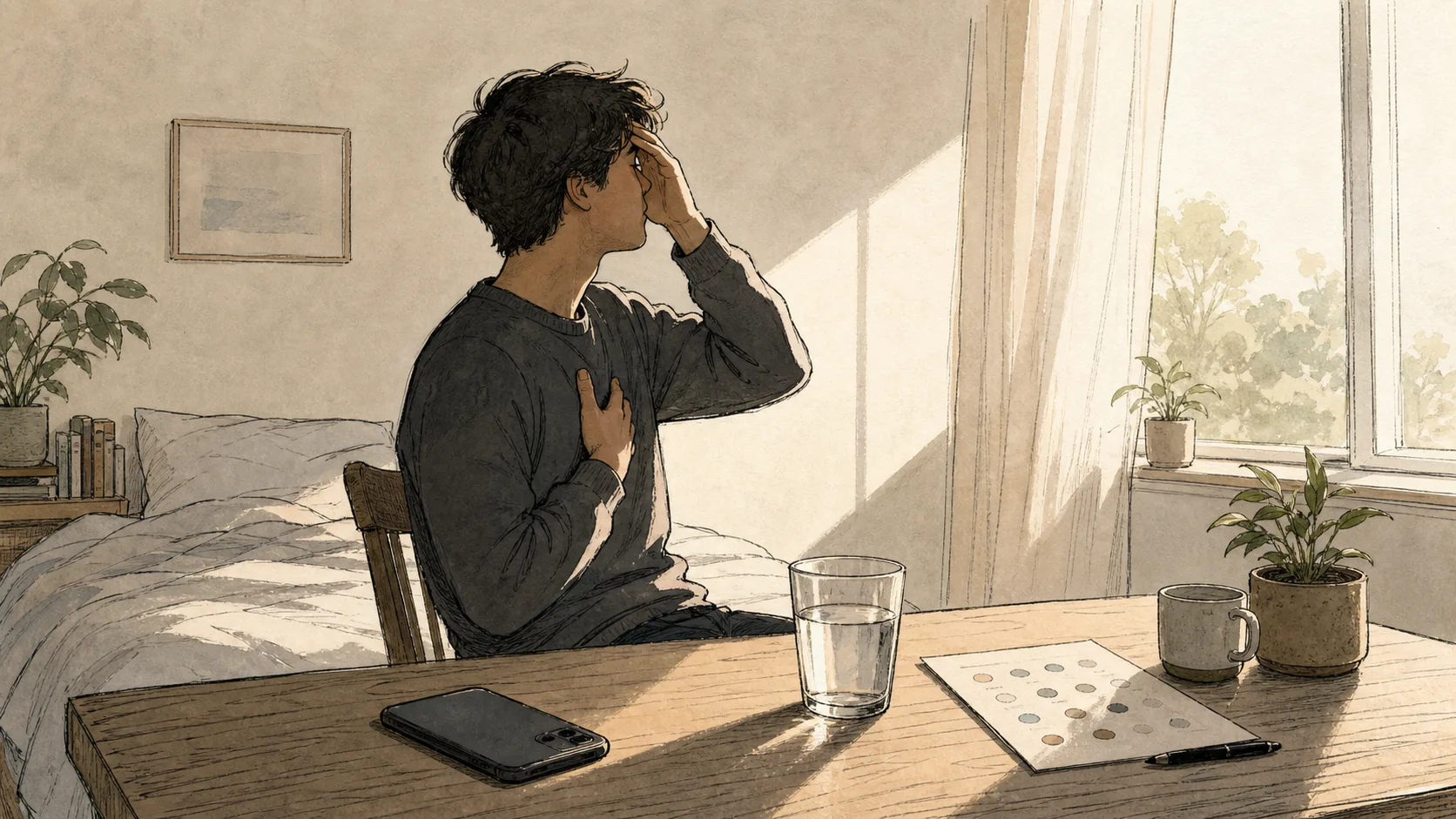
You may feel restless, irritable, flat, anxious, foggy, bored, lonely, sexually frustrated, or strangely empty. Sleep may get worse for a few nights. Urges may come in waves. Your brain may start producing very reasonable-sounding arguments for why you should go back "just once."
People often call this porn withdrawal.
That phrase is useful as a search term, but it needs careful handling. Porn withdrawal is not established in the same way alcohol, opioid, or nicotine withdrawal is established. There is no recognised medical diagnosis called "porn withdrawal syndrome." The closest formal condition is compulsive sexual behaviour disorder, or CSBD, which ICD-11 classifies as an impulse-control disorder, not as an addiction.
Still, the experience people are naming is real enough: when you remove a behaviour that has been regulating stress, boredom, loneliness, sleep, rejection, anxiety, or shame, the state underneath can rush back in. The first days can feel rough.
This guide is about that window: what symptoms people commonly report, what they probably mean, how long they may last, what helps, and when to get more support.
The short answer
Porn withdrawal symptoms are usually a mix of cravings, emotional rebound, disrupted routines, sexual frustration, sleep changes, and the loss of a familiar coping tool.
Common symptoms include:
- Strong urges to watch porn.
- Irritability or agitation.
- Low mood or flatness.
- Anxiety or restlessness.
- Trouble sleeping.
- Brain fog or poor concentration.
- Boredom that feels unusually uncomfortable.
- Sexual frustration or intrusive sexual thoughts.
- Loneliness or sadness that porn was masking.
- Shame, self-criticism, or fear that you will never change.
These symptoms do not prove that porn has damaged your brain. They also do not mean quitting is pointless. They mean your system is adjusting to the removal of a behaviour that probably did more than provide sexual stimulation. It changed your state quickly. Now you need slower, less destructive ways to change state.
Is porn withdrawal real?
It depends what you mean by "real."
People absolutely report withdrawal-like experiences when they stop or reduce problematic porn use. Research measures of problematic pornography use often include items about failed attempts to stop, cravings, return to use, and sometimes withdrawal-like discomfort. Clinicians also hear this pattern often: someone stops, then feels worse for a while, then either builds new coping skills or goes back to porn for relief.
But the science is more cautious than the internet. A recent short abstinence study found that trying to abstain from pornography for a week did not clearly produce a distinct withdrawal pattern in craving, mood, or withdrawal symptoms compared with people who were not trying to abstain. That does not mean nobody has a difficult first week. It means we should avoid treating every uncomfortable feeling after stopping porn as proof of a biological withdrawal syndrome.
The better framing is this:
Some people experience withdrawal-like symptoms after quitting porn, but those symptoms are probably driven by several overlapping mechanisms: craving, habit disruption, cue reactivity, emotional rebound, sleep disruption, and the loss of a coping strategy.
That framing is less dramatic. It is also more useful.
Why you can feel worse after stopping
Porn is often not only a sexual behaviour. It is a fast state-change tool.
It can turn anxiety into focus. It can turn loneliness into stimulation. It can turn boredom into novelty. It can turn shame into numbness. It can delay sleep. It can provide control when real life feels humiliating or uncertain.
When you remove that tool, two things happen.
First, the cues keep firing. The same room, same phone, same time of night, same stress state, same app, same private browsing ritual: your brain has learned that these conditions predict a quick reward or relief. That learning does not disappear on day one.
Second, the original state is still there. If porn was how you handled loneliness, then quitting porn may reveal loneliness more clearly. If porn was how you avoided work, then quitting porn may expose the task you were avoiding. If porn was how you fell asleep, then the first few nights may feel wired and uncomfortable.
This is why withdrawal lists can be misleading. The symptom is not always caused by "porn leaving your body." Often the symptom is the life state porn had been managing.
Common porn withdrawal symptoms
Use this as a map, not a diagnosis.
Cravings. This is the central one. The urge may feel physical, mental, emotional, or all three. It often comes with bargaining thoughts: "just once", "I need release", "I will start properly tomorrow", "this does not count", or "I deserve it after today."
Irritability. You may feel unusually short-tempered. Some of this is frustration. Some of it is the loss of an easy regulation tool. Some of it may simply be poor sleep.
Low mood or flatness. People often describe a dull, grey feeling after quitting. Be careful with catastrophic interpretations. Flatness is not proof that porn broke your reward system. It may be ordinary emotional rebound, boredom, loneliness, or the absence of a high-stimulation habit.
Anxiety and restlessness. If porn was used to switch off anxiety, quitting can make anxiety more visible. Restlessness can also be a cue-driven urge: the body has learned that discomfort usually gets resolved by a familiar route.
Sleep disruption. This is common when porn use was part of the late-night routine. The issue may be less about porn itself and more about the phone, blue light, secrecy, arousal, orgasm, guilt, and bedtime timing all being wired together.
Brain fog and poor concentration. Early quitting often involves mental noise: urges, self-monitoring, anxiety about relapse, poor sleep, and repeated decisions about whether to use. That can feel like brain fog.
Intrusive sexual thoughts. When you try not to think about something, it often becomes more salient. This does not mean you secretly want to relapse. It means suppression is a weak strategy.
Boredom. Boredom can feel almost painful if your nervous system is used to high-novelty sexual content. This is one of the most underrated symptoms. Many people relapse not because of unbearable sexual desire, but because ordinary life briefly feels too slow.
Shame or panic. Some people start scanning every mood change as evidence that they are damaged. That fear can become its own trigger. Panic is not recovery. Curiosity is more useful.
How long do porn withdrawal symptoms last?
There is no reliable universal timeline.
The internet likes clean claims: three days, seven days, two weeks, ninety days. Real patterns are messier. The timeline depends on how often you used porn, how automatic the habit became, what porn was doing for you emotionally, your sleep, your stress load, your mental health, your relationship context, and whether you changed the environment around the behaviour.
A practical way to think about it:
Days 1-3: The rule is new. Motivation may still be high, but urges can spike when the usual cues appear.
Days 4-10: This is often the difficult stretch. The novelty of quitting has faded, but the replacement routines are not yet strong. Sleep, irritability, boredom, and bargaining thoughts may show up here.
Weeks 2-4: Patterns become clearer. You may notice the specific states that drive urges: late night, loneliness, rejection, procrastination, conflict, alcohol, stress, or tiredness.
After a month: If symptoms are still intense, the issue may not be "withdrawal" alone. It may be depression, anxiety, ADHD, trauma, relationship stress, compulsive behaviour patterns, or a recovery plan that relies too much on willpower and not enough on environment.
Do not use timelines as a verdict. Use them as a rough orientation.
What helps in the first week
The first week is mostly about stabilising your environment and reducing panic.
Start with sleep. Put your phone outside the bedroom. Use a real alarm if needed. Keep the last 30 minutes before bed boring: shower, water, book, audio, lights low. If porn was part of falling asleep, your sleep may protest for a few nights. That is not a reason to return to the old routine. It is a reason to build a new one.
Eat normally. Move your body. Get outside early in the day. These are not motivational slogans. They reduce the background vulnerability that makes urges feel larger.
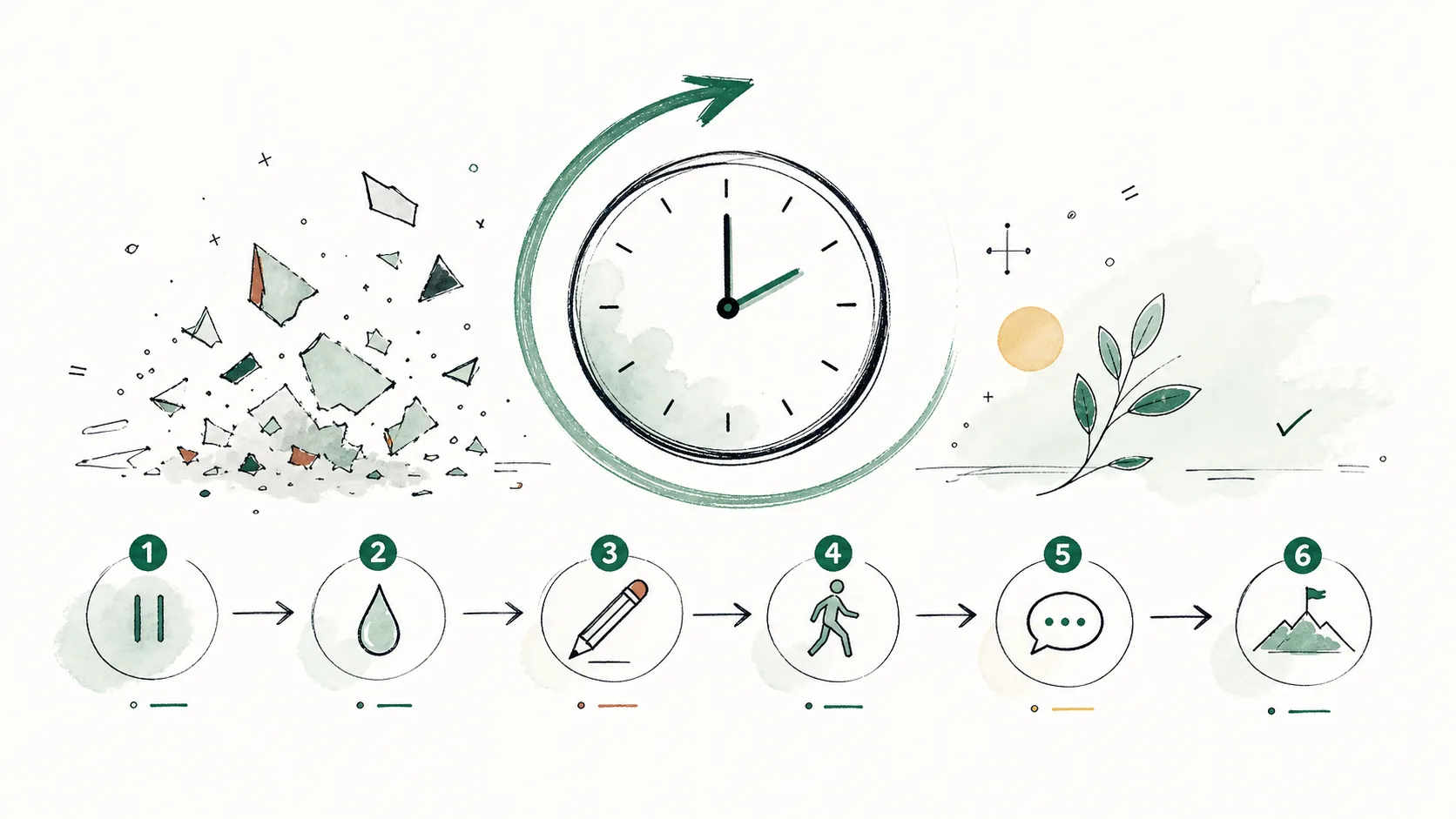
Use a short urge protocol:
- Stand up.
- Put the device down.
- Leave the room.
- Name the state: "This is an urge, and I am tired."
- Delay 10 minutes.
- Do one body-based action: walk, shower, food, water, stretch, tidy one surface.
- Log one line: time, trigger, permission thought.
Do not argue with the urge. Arguing keeps you close to the behaviour. Movement changes the state.
If the urge returns, repeat the protocol. Recovery is often less about one heroic refusal and more about running the same boring move several times.
What not to do
Do not turn every symptom into a brain-damage story.
You may feel foggy, flat, irritable, or anxious. That is unpleasant. It is not proof that you are permanently changed. Catastrophic explanations increase distress, and distress often drives the exact behaviour you are trying to stop.
Do not spend the whole day reading NoFap forums. Some community support helps. Endless scanning for timelines, flatline stories, testosterone claims, and worst-case recovery accounts can become another compulsive loop.
Do not make huge declarations when you feel bad. "I am done forever" often feels powerful for ten minutes, then becomes fragile. Use smaller behavioural rules: phone out of bedroom, blocker on laptop, walk after work, text before opening private browsing, no porn today.
Do not punish yourself after a slip. Shame makes the next use more likely for many people. A lapse is data. The useful question is: what state, cue, and permission thought came before it?
The porn withdrawal plan
Use this for the next seven days.
Day 1: remove the easiest route. Delete saved content, log out of accounts, move the phone out of the bedroom, and add blocker friction where it creates a useful pause.
Day 2: write the loop. Identify your most common time, device, place, emotion, and permission thought.
Day 3: build the bedtime rule. If porn happens late at night, the phone leaves the bedroom before the high-risk hour. Not when you feel ready. Before.
Day 4: prepare for boredom. Choose three low-friction alternatives: walk, shower, simple food, calling someone, cleaning one surface, gym, reading in a public room. Keep the list visible.
Day 5: add a person or a tool. Text a safe friend, use Iris, book therapy, join a group, or set a daily check-in. The point is to make the urge less private.
Day 6: review slips without drama. If you slipped, write the chain. If you did not slip, write what helped. Both are data.
Day 7: simplify the plan. Keep the two changes that clearly reduced risk. Drop the complicated parts you did not use. Recovery plans fail when they are too elaborate to run on a tired night.
When symptoms mean you need more help
Most withdrawal-like discomfort can be handled with structure, sleep, support, and urge skills. Some situations need more than a blog post.
Get more support if:
- Low mood, anxiety, panic, or insomnia is severe or not improving.
- You have thoughts of self-harm or feel unsafe.
- You feel at risk of harming someone else.
- Your porn use involves illegal material or coercive/exploitative content.
- You repeatedly cannot stop despite serious consequences.
- Porn use sits alongside alcohol, drugs, gambling, compulsive spending, eating problems, or other behaviours that feel out of control.
- You suspect ADHD, OCD, trauma, depression, or anxiety is driving the loop.
If you are in immediate danger or thinking about harming yourself, use emergency or crisis support now. In the UK, Samaritans is 116 123 and NHS 111 can route urgent mental health support. In the US or Canada, call or text 988.
If you are not in crisis but the pattern is persistent, consider a therapist, GP, doctor, or qualified mental health professional. You do not need to prove that "porn withdrawal" is a formal syndrome to ask for help with sleep, anxiety, depression, compulsive sexual behaviour, or loss of control.
Where Iris fits
The hard part is not knowing that porn is a problem. The hard part is catching the exact moment when discomfort turns into permission.
Iris is built for that moment. It helps you map the state underneath the urge, run a short protocol, recover after slips, and see the pattern over time. It is not a medical diagnosis and it is not a blocker. It is a coach in the place many urges already happen: your phone.
If you are in the first week and everything feels messy, start with the Iris quiz. It gives you a clearer picture of which states are driving the loop: stress, boredom, loneliness, shame, conflict, late-night access, or habit.
Once you know the pattern, "withdrawal" becomes less mysterious. It becomes a set of states you can plan around.
FAQs
Are porn withdrawal symptoms dangerous?
Usually, no. Cravings, irritability, sleep disruption, boredom, and mood swings are uncomfortable, but not usually dangerous. The exceptions are severe depression, self-harm thoughts, risk of harming someone else, illegal content, or symptoms that do not improve. Those need real support.
Is a flatline real?
People use "flatline" to describe low libido, low mood, or emotional numbness after quitting porn. The experience may be real, but the explanations online often overreach. Flatness can come from stress, anxiety, poor sleep, shame, depression, relationship issues, or simply losing a high-stimulation habit. If it persists or worries you, speak to a clinician.
Will quitting porn increase testosterone?
There is no good evidence that quitting porn or semen retention creates a reliable long-term testosterone boost. If you feel better after quitting, it is more likely because sleep, secrecy, time use, mood regulation, or self-trust changed.
Why are urges worse at night?
Night combines several risk factors: tiredness, privacy, phone access, boredom, loneliness, fewer interruptions, and weaker self-control. Treat nighttime urges as an environment problem first. Move the phone, change the room, and build a boring shutdown routine.
What if I relapse during withdrawal?
Do not turn one lapse into proof that you failed. Stop the session, move the device, change physical state, write one sentence about the chain, and return to the plan the same day. We wrote a detailed guide here: You watched porn. The next hour matters most.
References
Bőthe, B., Tóth-Király, I., Potenza, M. N., Orosz, G., and Demetrovics, Z. (2020). High-frequency pornography use may not always be problematic. The Journal of Sexual Medicine, 17(4), 793-811.
Fernandez, D. P., Kuss, D. J., and Griffiths, M. D. (2021). The Pornography "Rebooting" Experience: A Qualitative Analysis of Abstinence Journals on an Online Pornography Abstinence Forum. Archives of Sexual Behavior, 50, 711-728.
Fernandez, D. P., Kuss, D. J., and Griffiths, M. D. (2023). Effects of a 7-Day Pornography Abstinence Period on Withdrawal-Related Symptoms in Regular Pornography Users: A Randomized Controlled Study. Archives of Sexual Behavior, 52, 1213-1225.
Kraus, S. W., Krueger, R. B., Briken, P., First, M. B., Stein, D. J., Kaplan, M. S., Voon, V., Abdo, C. H. N., Grant, J. E., Atalla, E., and Reed, G. M. (2018). Compulsive sexual behaviour disorder in the ICD-11. World Psychiatry, 17(1), 109-110.
Lewczuk, K., Wizła, M., Glica, A., Potenza, M. N., Lew-Starowicz, M., and Kraus, S. W. (2022). Withdrawal and tolerance as related to compulsive sexual behavior disorder and problematic pornography use: Preregistered study based on a nationally representative sample in Poland. Journal of Behavioral Addictions, 11(4), 979-993.
Marlatt, G. A., and Gordon, J. R. (Eds.). (1985). Relapse prevention: Maintenance strategies in the treatment of addictive behaviors. Guilford Press.
World Health Organization. (2024). ICD-11 for Mortality and Morbidity Statistics: Compulsive sexual behaviour disorder.
If the first week feels messy, start with the Iris quiz. It helps you map the state underneath the urge, which is usually more useful than trying to wait out "withdrawal" with willpower alone.
Quit porn with Iris.
Iris is a science-backed coach for compulsive porn use, delivered on Telegram. Take the three-minute quiz to see if it's a fit.
Take the quiz →